GreenCyber

Free Cyber Exposure Snapshot

They told me they had 12 devices facing the internet.
They had 47.

Give me one thing. Your public domain name. I will run a live external scan and show you exactly what an attacker sees before they pick a target.

No network access. No credentials. No call to get the report.

Start the scan

Your three to five most critical findings, inside 48 hours.

I send the report here, and the domain it sits on gives me a second surface to look at.

Please use your work email address. A free mailbox does not tell me what to scan.

Filled in from your email. Change it if you want a different domain looked at.

It changes how far I look, and how I write it up.

What the scan actually finds
Adam Green, CISO
2 min 53
  • Mutual NDA before anything runs
  • Publicly available data only
  • No network access, no credentials
  • No call to book to get the report
  • No follow up you did not ask for

A recent assessment

You cannot patch what nobody knows exists.

Their team was not careless. They were counting the things they had built on purpose. Nobody was counting the things that simply answered when somebody knocked.

And whoever is out there has already looked at your network too. Not might have. Have.

The client told me they had

12

devices facing the internet

  • +18 old servers nobody had decommissioned
  • +1 building controller on the open internet
  • +2 servers everyone had forgotten
  • +14 other exposed services

Every one of them a door. Every one unlocked.

The gap nobody tells you about

Two completely different views of your risk.

Where your IT team sits

Inside the perimeter, protecting what they built and know about. That is the job, and most of them do it well.

From here, everything below is invisible.

Where an attacker sits

  • Shadow IT nobody signed off
  • Leaked staff credentials
  • An open remote access port
  • A misconfigured cloud bucket

From here, that is your whole map.

266

days is the average time an Australian business takes to discover a breach. If something gets in this morning, that is three financial quarters.

87,000

cybercrime reports logged by the Australian Signals Directorate last financial year.

43%

of attacks hit small and mid sized businesses, because you are easier to breach than the big end of town.

What happens next

Four steps, and three of them are mine.

Step 01

You give me a domain

The same thing Google already has. Nothing else.

Step 02

I look from the outside

A live external scan of your attack surface, using publicly available data. No access, no credentials.

Step 03

I write it up myself

One page. Your three to five most critical findings, in plain language, inside 48 hours.

Step 04

You do what you like with it

Hand it to your IT provider. Take it to your board. There is no call to book and nothing to sit through.

Adam Green

The person who writes it

The big firms send a graduate and bill you at head of security rates. I am the head of security, and the snapshot is free.

I have been a CISO for twenty odd years and led response through more than twenty live incidents and ransomware attacks. I have never once come back from an assessment empty handed.

I have no product to push you with. There is no managed service sitting behind this. What you see is what is actually there.

When did your current provider last send their own CISO to look at your external exposure? Most teams cannot remember. Most are genuinely surprised by what we turn up.

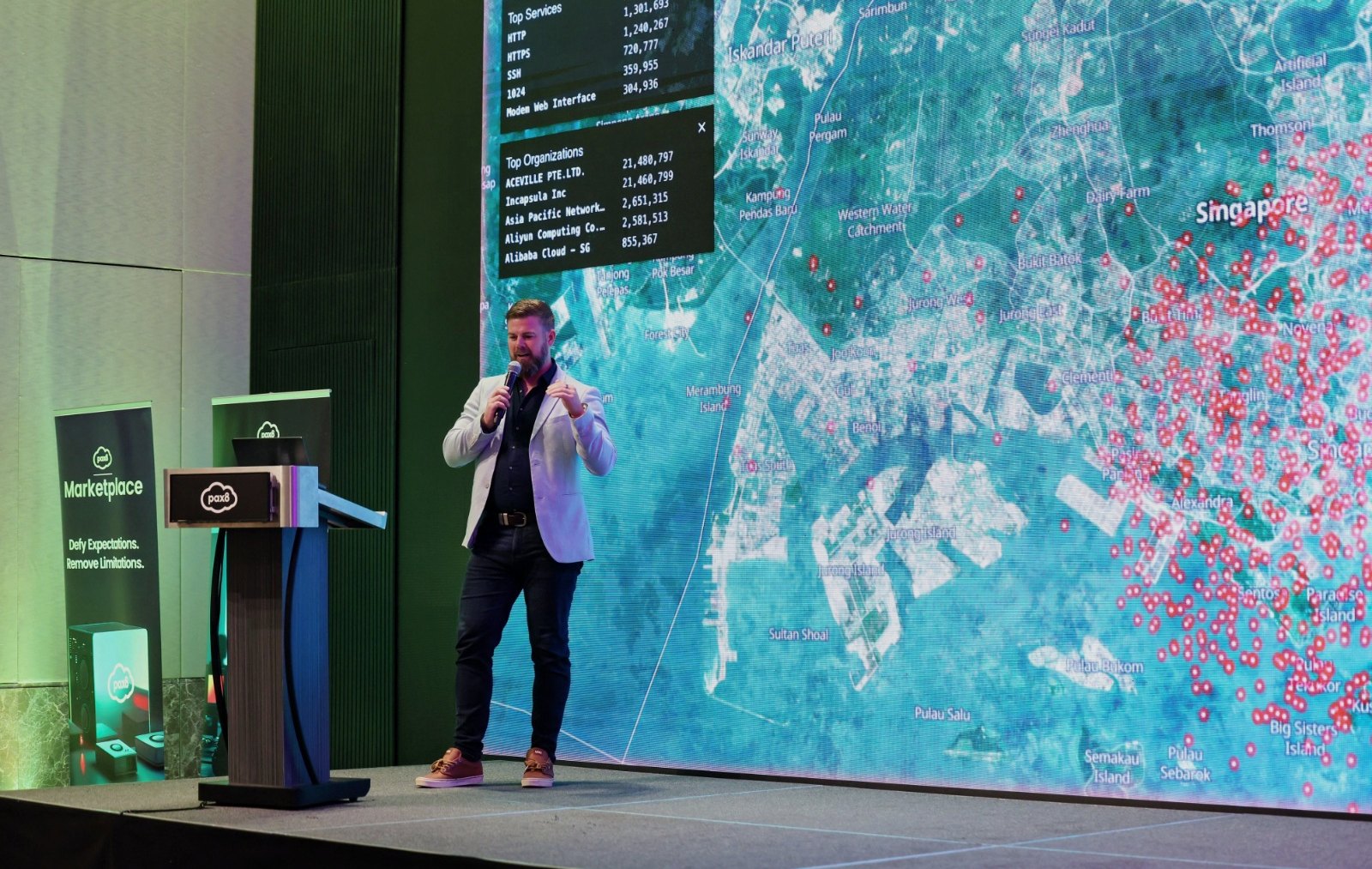
Adam Green on stage in front of a live external exposure map of Singapore, covered in red dots
Every red dot is a device answering to anybody who asks. Singapore, live on screen, May 2026.

See exactly what the attackers already see.

Enter your domain. Forty eight hours later you will know what is actually facing the internet, and which three to five things need attention first.

Start the scan

Cyber Exposure SnapshotYour three to five most critical findings, inside 48 hours.

Start the scan